
And how to choose the right Cotton Yarn.
Crochet dishcloths are one of those things that are in the category of ‘if you know, you know’. So many times, I’ve given them as gifts to friends who were NOT in the know and I always laughed at the puzzled, slightly mocking, look they would give me. I would simply say, ‘try it’. Almost every time the response was, “Oh my goodness! Can you please make some more for me?”
I think the Waffle Dishcloth is my favourite of all the dishcloths I’ve designed so far. It has the perfect blend of texture and thickness to mop up any of your spills, clean your kitchen and bathroom benches, wipe food off your dishes, or any other cleaning job you can throw at it. Then when it’s dirty, simply pop it in the washing machine and you’re ready to go again. Just don’t tumble dry it. Ask me how I know! 🤦🏼♀️
The waffle stitch is easier than most people think. If you’re not familiar with it, I have a tutorial for it HERE. The tutorial has written instructions and a video demonstrating how to make this stitch.
Easy peasy!
Yarns for Dishcloths
Let’s talk for a moment about what sort of yarns to use for dishcloths. I know it might seem tedious reading through this information but believe me, it actually matters quite a lot.
Dishcloths are almost always made from 100% cotton yarn. But not all cotton yarn is equal. Below is a guide as to what to look for in cotton yarns and some recommendations of brands that are tried and true. I don’t get any compensation for the recommendations here – this is my hobby, not my job. So anything I recommend here is because I’ve used it and it has worked well. 😊
Thickness
For most dishcloths you will want a reasonably thick yarn. I usually go with worsted weight (Medium / 4) cotton yarn. That said, the yarn I used for the waffle cloths shown here was somewhere between a DK (Light / 3) and Worsted.
Normally the yarn we buy is labelled with a name or a number to designate it’s thickness (also called yarn weight which is different to how much a skein of yarn weighs). The scrollable table below lists those categories as defined by the Craft Yarn Council:
| Yarn Weight Symbol & Category Names |  |  |  |  |  |  |  |  |
|---|---|---|---|---|---|---|---|---|
| Type of Yarns in Category | Fingering 10-count crochet thread | Sock, Fingering, Baby | Sport, Baby | DK, Light Worsted | Worsted, Afghan, Aran | Chunky, Craft, Rug | Super Bulky, Roving | Jumbo, Roving |
However, cotton yarn can sometimes be sold with a different system indicating its weight/thickness. This is a legacy of using cotton yarn for weaving. This type of labelling uses a number system where the weight of the yarn is expressed as a fraction like 8/2 or 4/8 or 20/2. Since yarn is made up of single strands plied together, the first number represents the yarn size (the higher the number, the finer the single strand of yarn is) and the second number indicates how many strands are twisted together to create the yarn (more strands means thicker yarn); essentially, the higher the first number, the thinner the yarn is, while the higher the second number, the thicker the yarn becomes. I know, it’s still really confusing. Generally, for a dishcloth, you would want an 8/8 yarn in this system.
The exception to the thickness rule is the dishcloths I designed using bobbles to create shapes (think dachshunds, christmas trees, monograms, etc). For those, I sometimes use a thinner cotton otherwise the pattern would just be too big.
Mercerised or Not?
Definitely NOT! Mercerised cotton yarn has been chemically treated to improve its strength, appearance, and dye absorption. It is generally shiny in appearance. I LOVE mercerised cotton for weaving on my Inkle and Inklette Looms BUT it is not good for dishcloths. Firstly, mercerised cotton is generally very thin. Secondly, the chemical treatment makes the cotton less absorbent which means a dishcloth made of it won’t actually pick up the spills or scrub off the grime very well. So mercerised cotton kind of defeats the purpose of a dishcloth!
The Shedding Effect
There are some cotton yarns that I’ve used that ‘frayed’ and left bits of cotton behind on all the surfaces it was used on. Kind of like how Hugo and Marcus shed their fur all over my couch…and bed… and carpets…. and… well, you get the picture. Those cotton yarns are generally unbranded or very cheap (for a reason!). If you aren’t sure whether your cotton yarn will shed or not, get it wet and rub it against the kitchen benchtop or a plate. Does it leave bits and pieces behind? If yes, don’t use it. 🙂
Yarns I Recommend
I’ve made a lot of dishcloths and scrubbies over the years and have settled on some favourite yarns.
#1 – Lily’s Sugar ‘n Cream
This is my go to yarn for dishcloths, tawashis, and cotton scrubbies. I’ve used both the solids and the ombres. It is 100% USA Pima Cotton. It is the perfect thickness and does not shed. The dishcloths I’ve made with it wash well for re-use and last for years. Seriously. Unfortuantely it’s not always easy to get where I live in Australia and when I can find it it’s way more expensive than it is in the USA so when I visit my grandkids in America I usually stock up on it!
This is a gauge 4 – medium – worsted weight yarn. The ombre comes in 57g / 86m balls while the solids comes in 71g / 109m balls.


#2 – Scheepjes Cahlista
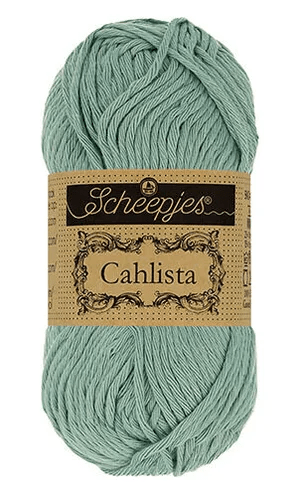
Scheepjes is a Dutch yarn brand with 165 years of history and has a huge range of yarns I love. Their Cahlista is gorgeous to work with. It is a double-gassed cotton which means it has had extreme heat applied twice to burn off any fuzzy bits and create a smooth flowing cotton – no shedding! It is available in 109 colours. Yep, over a hundred. So you can’t claim you couldn’t find ‘just the right colour’. 😂 Calhista is an Aran weight yarn which comes in 50g/85m balls.
#3 – Fiddlestick’s Finch
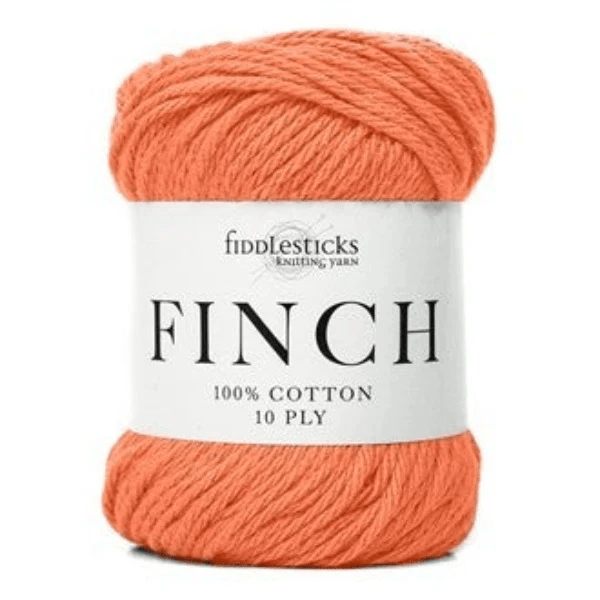
Finch is an Aran weight combed cotton which will not shed as easily as others because it is made from threads that are combed before the cotton is spun. Combing the threads means the shorter fibres, which are the ones that shed, are removed. It might not be as ‘shed free’ as double gassed, Egyptian or Pima cotton, but it’s still a fairly safe choice for dishcloths. Each ball contains 71 g / 109m of yarn.
#4 – Abbey Road Sunshine
Abbey Road Sunshine is made in India and available from Spotlight Stores in Australia. At 100g / 210m per ball, it is a bit thinner than the other yarns. I picked it up when I couldn’t get my hands on my other go-to cotton yarns and grabbed it out of my stash the other day when the inspiration for the Waffle Dishcloth hit. So far so good.

Purchasing Yarn
If you are in Australia, you can get Scheepjes Cahlista and Fiddlestick’s Finch online at Bellemae Yarns. If you live local to me in Ballarat, you can also get Finch at Sew Darn Special. I usually source my Lily Sugar ‘n Cream from either Sew Darn Special locally, or when they can’t get it, from American Yarns online. Again, I do not get any compensation for these recommendations. I can tell you, you will get amazing customer service from Yasmin at Bellemaeyarns and at Sew Darn Special. 🙂
If you are in the USA, I would just go straight for the Lily Sugar ‘n Cream. I know some stores there have very similar yarns (which we can’t get in Australia) such as Crafter’s Choice. And Hobbii have cotton yarns online but I admit, I’ve never used them for dishcloths so I can’t tell you how they are.
Okay, enough about yarn. I bet you’re sick of hearing about them right? Right. Let’s move on!
The Pattern
Materials
Note: the yarn and hook size you use can affect the final measurements. The blue dishcloth in the photo is 18cm (7″) across using the yarn and hook below and this pattern. The other dishcloth used 3 less stitches across and is smaller.
- Abbey Road Sunshine cotton yarn (or yarn of your choice)
- 4.0mm hook (or hook size appropriate to the yarn you are using)
- Yarn Needle
Abbreviations
- ch – chain
- dc – double crochet
- fpdc – front post double crochet
- fdc – foundation double crochet (optional)
- st – stitch
Notes
- The turning chain always counts as the first stitch. So, the first stitch you will work in a row is worked into the second stitch of the row.
- There is a tutorial for the Waffle Stitch at https://drunkdogcreative.com/2025/02/01/crochet-the-waffle-stitch/.
- If you are not familiar with how to do a front post double crochet, then there is a tutorial for that stitch at https://drunkdogcreative.com/2020/04/04/front-post-and-back-post-stitches-a-long-dog-wool-stitch-tutorial/
- Instructions in [ ] are repeated the number of times indicated.
Instructions
Row 1 (Option A): 33 fdc
Row 1 (Option B): ch 35, dc into 4th ch from hook, dc in each st to end of row, turn. (33 sts)
Row 2: ch 2, [fpdc around next st, dc in each of the next 2 sts] 10 times, fpdc around next st, dc in next st, turn.
Row 3: ch 2, [dc in next st, fpdc around each of the next 2 sts] 10 times, dc in each of the next 2 sts, turn.
Rows 4-20: Repeat rows 2-3.
Finish off. Weave in Ends.

Marcus, Polly and Hugo, the dogs of Drunk Dog Creative, want to remind you to subscribe to this blog, share with your friends, and follow Drunk Dog Creative on all the socials.
Woof woof. Sit. Stay. Follow us. Good human.
AND ON RAVELRY!




 Drunk Dog Creative
Leave a comment